How to Improve Reading Comprehension Without Reading Slower
Summary
How to improve reading comprehension: give each text a job before you start, pause every few paragraphs to check you could restate the last section, and write three sentences from memory when you finish. Skip rereading, heavy highlighting and speed reading, which feel productive and mostly are not. A short summary read first works as a map, never as a replacement for understanding the full argument.
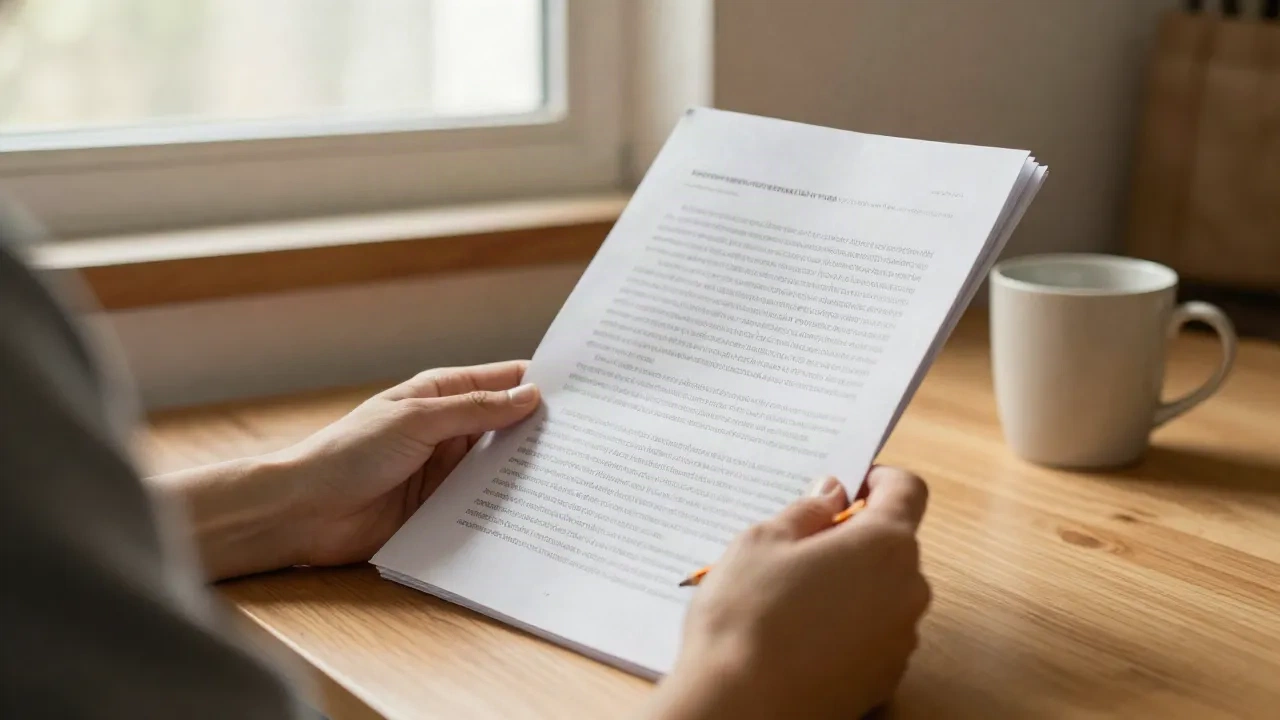
How to improve reading comprehension comes down to one change: stop trying to read faster and start giving each text a job. Decide what you want from it before you begin, check your understanding every few paragraphs, and write down what you remember once you finish. These three habits cost about two minutes per article, and they work on a long report as well as a short essay.
Why does reading more not make you understand more?
Most people assume comprehension is a by-product of volume. Read enough and it sorts itself out. In practice, the person with 400 saved links and the person with ten often understand the same amount, because comprehension does not come from exposure. It comes from what the mind does while the eyes move.
The most common failure is not slow reading or a thin vocabulary. It is the quiet drift: you reach the bottom of a page and realise nothing stayed. Researchers call the missing skill monitoring, the habit of noticing when understanding has stopped. The US Institute of Education Sciences practice guide on comprehension strategies lists it alongside asking questions, predicting and summarizing as skills that can be taught and that measurably help.
That is good news. It means comprehension behaves like a practice, not a trait.
What should you decide before you read a single line?
Start with the purpose. A text read to decide whether it matters needs a different pass from a text read to be able to explain it next week. Most of us use one speed and one attention level for everything, and then wonder why some pages stick and others vanish.
Before you start, finish one of these sentences in your head:
I am reading this to decide whether it deserves a full read.
I am reading this to answer one specific question.
I am reading this to be able to explain it to someone else.
The second one is the most underused. A single question narrows the whole page. You skim the parts that do not bear on it and slow down where they do, which is what good readers do without noticing.
Then spend thirty seconds on the shape of the text. Read the title, the headings and the first sentence of a few paragraphs. You are not reading yet. You are building a rough map, so that when a detail arrives it has somewhere to land.
Is a summary a shortcut or a scaffold?
Here the site's own subject matters, so it is worth being precise. A summary can replace a reading, and often it should: most of what lands in a read-later queue does not deserve a full pass. That is a triage decision, not a comprehension one.
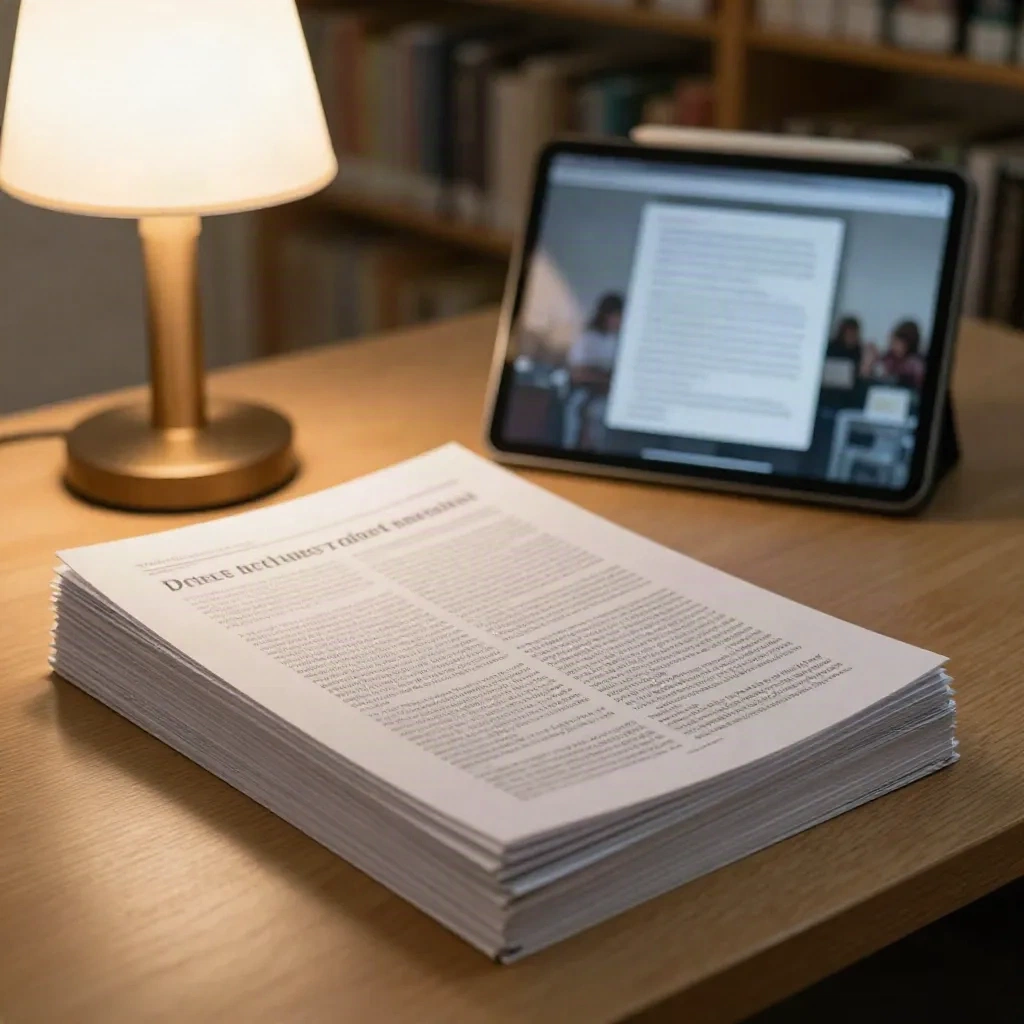
But a summary can also come before a reading. A 150-word synthesis works as the map described above, written by someone else. You learn the claim, the structure and the two or three terms that carry the argument. Then you read the full text knowing what to watch for, and your attention goes to the evidence instead of the orientation.
The mistake is to stop there and believe you have read the piece. A summary tells you what a text concluded. It cannot tell you whether the reasoning held, which objections were waved away, or what the author left out. If the decision matters, the summary is the first pass and never the last.
A simple rule: if you could not write the summary yourself after reading the original, you have not yet understood it.
How do you notice when you have stopped understanding?
This is the skill with the largest payoff and the least glamour. Every few paragraphs, pause for one beat and ask whether you could restate the last section in a sentence. If the answer is no, do not push on. Go back to the start of that section and read it again, slowly.
The trick is to make the pause cheap. A mark in the margin, a tick on a sticky note, a single breath. If checking costs effort, you will skip it exactly when you need it.
Some signals that you have drifted:
You have reread a sentence twice and still could not paraphrase it.
You are thinking about something unrelated and your eyes are still moving.
A term appeared three paragraphs ago and you never learned what it meant.
That last one deserves attention. Unknown words rarely ruin a text on their own. Unknown words you ignored, stacked up over several pages, do. When a term recurs, stop and pin it down, from context first and a dictionary second.

Why rereading, highlighting and speed reading feel productive and mostly are not
Skip the techniques that dominate study advice. Rereading a page you just read produces fluency: the words look familiar, so you feel that you know them. Familiarity and understanding are different things, and the feeling is a poor guide to which one you have.
Highlighting has the same flaw. Colouring a sentence is a decision to postpone thinking about it. A page that is two-thirds yellow records nothing except that you were present.
If you must mark a text, mark less. One line per page, the sentence you would quote if someone asked what the page was about. Choosing it forces the judgement that highlighting lets you avoid.
Speed reading belongs in the same pile. The evidence for reading at several times your normal pace without losing comprehension is weak, and the tradeoff is easy to observe yourself: push your speed and watch what you can recall afterwards. Speed is a symptom of familiarity with a subject, not a skill you can bolt on.
What actually works: retrieval, not review
The habit with the strongest evidence behind it is also the least comfortable. When you finish, close the text and write down what you remember. Three sentences from memory beat ten minutes of reviewing the page, because pulling something out of memory is what builds the memory.
It will feel worse than rereading. You will discover that you remember less than you thought, and that is exactly the information you were missing. The gap tells you which section to go back to.
A workable version takes under two minutes:
Write the main claim in one sentence, without looking.
Write one piece of evidence or one example that supported it.
Write one thing you doubt or would want to check.
Then open the text and compare. The comparison is the learning. Keep the note somewhere you will find it, a plain file is fine, and you have a small library of things you actually understood.
Readers who already keep a reading stack can fold this in cheaply. Tools that let you highlight and export notes make the recall step easier to store, though none of them does the remembering for you.
Highlights are a good starting point for the recall note, as long as you write the note yourself. Pasting highlights into a document and calling it a summary is just rereading in a different font.
Does the screen make comprehension worse?
A little, and under predictable conditions. A meta-analysis of 54 studies by Delgado and colleagues found that readers understood informational text slightly better on paper than on screen. The gap was small and it grew when readers were under time pressure. It was not there for narrative texts, and it shrank when people read at their own pace.
Two things follow. First, the screen is not the villain. The conditions around it are: tabs, notifications, the sense that the next thing is one swipe away. Second, if you are reading something dense and it matters, the cheapest fix is to remove the time pressure, not to print everything.
Some practical adjustments that cost nothing:
Read the hard texts in a single window, with notifications off.
Give yourself a fixed block instead of squeezing a long piece between meetings.
Print or switch to a dedicated reading device for anything you need to retain.
Apps built around calm reading, with no social layer and no streaks, help here mainly by removing temptations.
How do you build a reading habit that survives a busy week?
Technique falls apart when the week does. The version of this that lasts is smaller than most guides suggest.
Pick one text a day that you will read properly: purpose, a few pauses, a three-sentence recall. Everything else gets triaged, skimmed or summarised, and you accept that without guilt. One text read well is worth more than ten read to the bottom and forgotten.
Choose the time deliberately. Many people find the first hour of the day is when their attention is least fragmented, but this varies, and the right slot is the one you will actually keep. If a ten-minute block works, use ten minutes.
Keep the queue honest too. A pile of links you will never open does not help comprehension, it just taxes it. Once a week, delete what you no longer care about. The pile shrinks and the few things left get your full attention.
What does work is flexible pace. Read easy and familiar material quickly, slow down where the argument tightens, and stop trusting a single speed for everything. Good readers vary constantly. They simply do it without announcing it.
Here is what one session looks like. Take a long article you have been meaning to get to. Spend a minute on the title and headings. Say in one sentence why you are reading it. If a summary exists, read it first and note what it leaves open.
Then read in chunks. At each pause, restate the last section to yourself. When a term stays fuzzy, resolve it before moving on. At the end, close the page and write your three sentences.
Total overhead: perhaps two minutes. What you get back is a text you can discuss a month later, which is the only definition of comprehension that matters.
None of this is a question of finding the right tool. It is a question of habit, and the habit is small enough to start with the next thing you open.