Otter.ai Alternatives: 4 Notetakers I Actually Tested
Summary
Otter.ai alternatives usually get compared on transcript accuracy, which mostly solved itself years ago. What I actually tracked across six weeks of client calls was the free tier ceiling, whether a bot shows up uninvited, and what each tool hands you once the recording stops. TicNote came out ahead because it is the only one that turns a meeting into a file I reopen, not another transcript I skim once.
Otter.ai alternatives started mattering to me the day its free plan cut off a client call at exactly 30 minutes, mid-sentence, with no warning. Six weeks and five tools later, TicNote is the one I kept open: it turns a meeting into a report or a deck instead of another transcript to skim. Fathom is the honest runner-up if free and unlimited is the whole point.
Why I went looking for otter.ai alternatives
I use Otter for the same reason most people land on it first: it is the default. Live captions inside Meet, decent speaker labels, an app that has been around long enough to feel finished. None of that is the problem.
The problem showed up in the free plan's fine print. Thirty minutes per meeting sounds generous until a discovery call runs long, which discovery calls always do. And even on a paid seat, Otter caps AI Chat queries at 200 a month, which is not much if you actually want to ask your own meeting history a question instead of rereading it.
What I actually tested
I recorded fourteen real calls, client work and a few user interviews for a side project, spread across six weeks on the free tier of five tools: Otter.ai, TicNote, Fathom, Fireflies, and tl;dv. Six to eight calls per tool, not one demo run each. I was not measuring transcription accuracy, which is close to solved across this whole category now. I was tracking three things: how long the free tier actually lasted before it asked for a card, whether a bot showed up as an uninvited meeting guest, and what I had in my hands once the call ended.
Fathom: free, unlimited, and mid-acquisition
Fathom's pitch is the simplest of the five: no meeting cap, no seat limit, no expiry on your history, on the free plan, indefinitely. That is unusual in a category where "free" usually means "free for two weeks." The bot-free capture option, still in beta on Mac, also means one fewer awkward extra face on a client call.
Worth flagging: partway through my test window, Fathom's site started carrying a banner that it is now part of Superhuman. Nothing about the free tier changed while I was using it, but it is the kind of acquisition that tends to reshuffle pricing a year out, so I would not assume today's terms hold indefinitely.
Fireflies and tl;dv: built for a sales team, not a desk of one
Fireflies and tl;dv both do more than Otter once a call ends, and both make that extra work legible mainly if you already live inside a CRM. Fireflies ships over 200 role-specific "AI Skills," which is a lot of surface area if you are one person, and its AskFred search across your whole call archive is genuinely useful once you have enough calls to search. tl;dv leans into sales coaching, talk-time tracking, objection flags, at a price that undercuts Gong by a wide margin.
Neither tool is built with a solo consultant in mind. The free tiers work fine for testing, but the features that justify paying, CRM sync, coaching scorecards, live team playbooks, are aimed at a revenue team, not at someone reading their own meeting notes back later.
TicNote: the one that stopped feeling like more transcripts
Here is the thing about a transcript: nobody rereads it. That is the same problem this whole site exists to solve for saved links, and it turns out meeting notes have the identical failure mode. You record the call meaning to go back through it, and you don't, because a transcript is not a document, it is raw material waiting for someone to do something with it.
TicNote's Shadow Agent is the first tool in this batch that actually does that something. Point it at a project, a client call plus a couple of reference PDFs, say, and it generates an actual file: a comparison dashboard with real charts, an editable slide deck, a report with citations that click back to the exact moment in the recording they came from. The Chrome extension captures the call directly too, so no bot shows up in the participant list, which two separate clients have commented on without me prompting them.
It is not flawless. The free tier still caps at 300 minutes a month, so a genuinely heavy week of calls will hit the ceiling. And Shadow Agent only works inside a project you have set up in advance; point it at your default recordings folder and it has nothing to generate from. But it is the only tool of the five that changed what I did after a meeting ended, instead of just changing how fast I could skim what was said during it.
Otter.ai: still fine, just the least ambitious option now
None of this makes Otter.ai bad. The transcript is accurate, the live captioning genuinely helps during the call, and the mobile app is more polished than any competitor here. It remains a reasonable pick for someone who mainly wants a clean record of what was said and a short summary underneath it.
What it is not, four alternatives and six weeks later, is the tool doing the most with what it captures. Every other option on this list has decided that a transcript is a starting point. Otter still treats it as the finish line.
Which otter.ai alternative should you actually pick
If free and unlimited matters more than anything else to you, Fathom is the straightforward answer, just keep an eye on the Superhuman acquisition over the next few pricing cycles. If your team already lives inside Salesforce or HubSpot, Fireflies or tl;dv will feel native in a way a standalone notetaker never will. And if what you actually want out of a meeting is a document, not a transcript, TicNote is the one I kept paying for after the free tier ran out.
The pile of transcripts nobody rereads is not really a transcription problem. It is the same problem as forty unread tabs: too much raw text, not enough that turns into something you would reopen.
At-a-glance
| TicNote | Fathom | Fireflies.ai | tl;dv | |
|---|---|---|---|---|
| Free tier ceiling | 300 min/month, no per-meeting cap I hit in six weeks | No cap, no seat limit, no expiry on history | 400 min/team storage, 20 AI summary credits | Unlimited recordings and transcription, 1 user |
| How it joins the call | Chrome extension records directly, no bot in the participant list | Bot, or bot-free capture in beta on Mac | Bot named Fred, invited manually or auto-joins from your calendar | Bot joins Zoom, Meet, or Teams |
| What you get once the call ends | Shadow Agent turns your sources into a report, deck, or dashboard | Instant call summary, action items, AI Scorecards on paid tiers | 200+ role-specific AI Skills: call scoring, recruiting notes, drafts | AI meeting insights plus a sales-coaching layer on talk time |
| Searching older meetings | Every AI claim links back to the exact source moment in your project | Ask Fathom covers your whole history once you are on a paid plan | AskFred searches your entire archive in plain language | Multi-meeting AI search across your full call history |
| Who it is really built for | Consultants and solo builders who need a document out of a meeting | Individuals and small teams who refuse to pay for a recorder | Sales and support teams living inside a CRM pipeline | Revenue teams that want Gong-style coaching without Gong pricing |
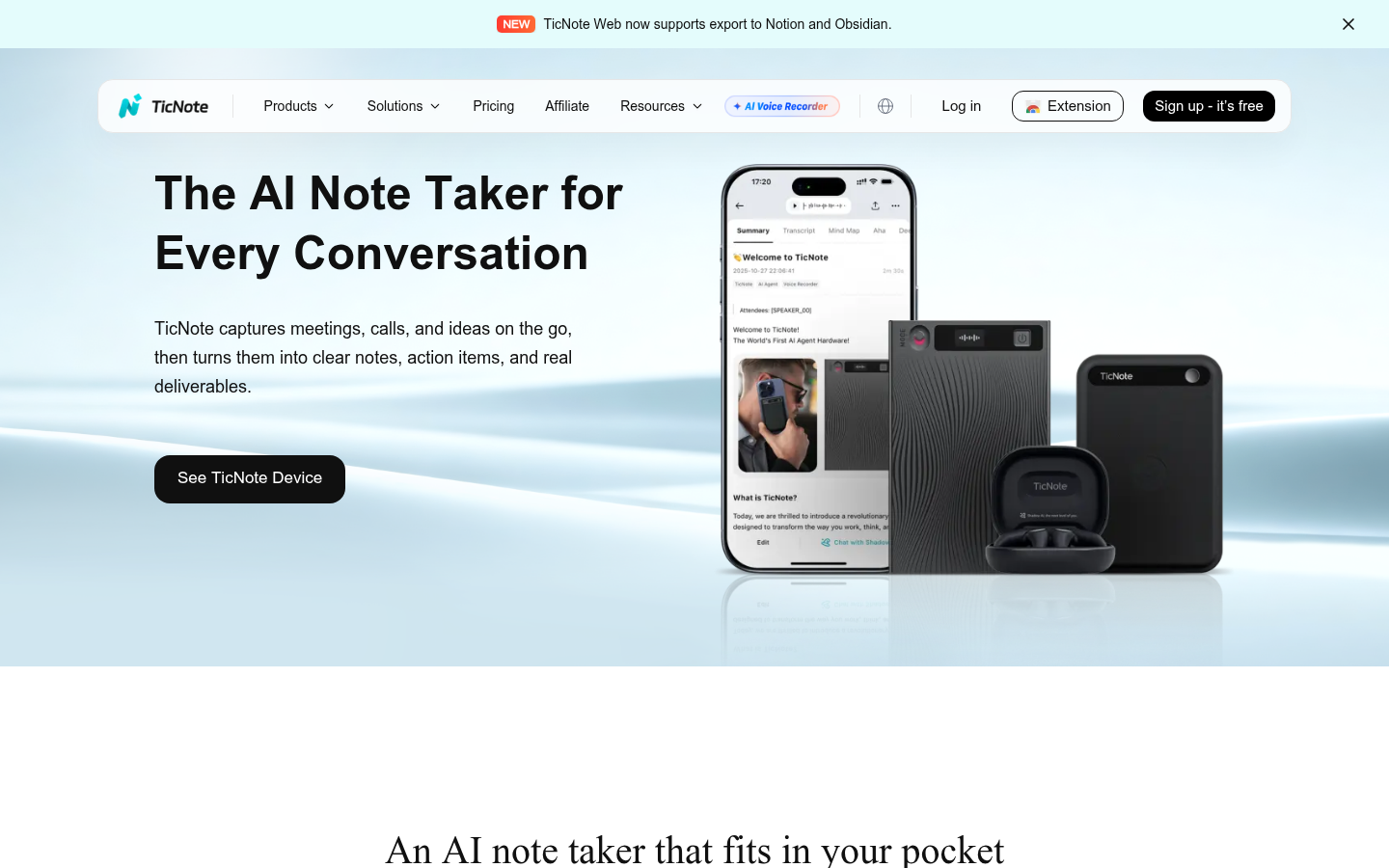
TicNote
- Shadow Agent turns a project's sources into an exportable report, deck, or dashboard
- No bot joins the call, the Chrome extension captures it directly, which clients notice
- Sources stay clickable, so a generated claim traces back to the exact meeting moment
- Free tier still caps at 300 minutes a month, which a full week of calls burns through
- Shadow Agent needs a project set up first, it does nothing from the default recordings folder
The only one of the five that gave me something to reopen a week later, not just skim.
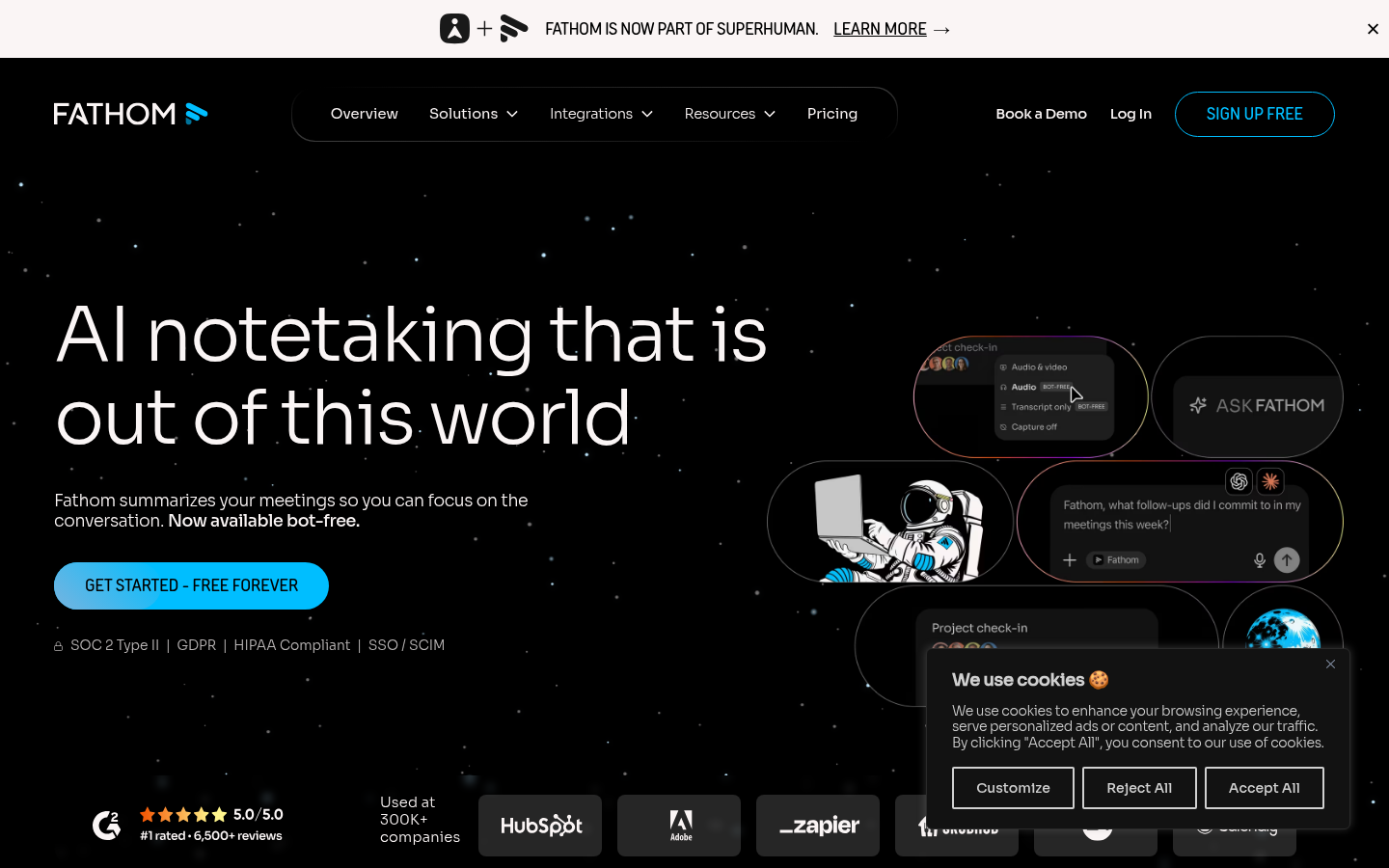
Fathom
- Free plan has no meeting cap, no seat limit, and no expiry on your call history
- Bot-free capture in beta on Mac skips the extra participant showing up on a call
- Ask Fathom searches your whole meeting history in plain language on paid plans
- AI Scorecards and CRM sync, the features a sales team actually wants, sit behind Business
- Was mid-acquisition into Superhuman when I tested it, worth watching for pricing changes
The most generous free tier here by a wide margin, with no strings attached yet.
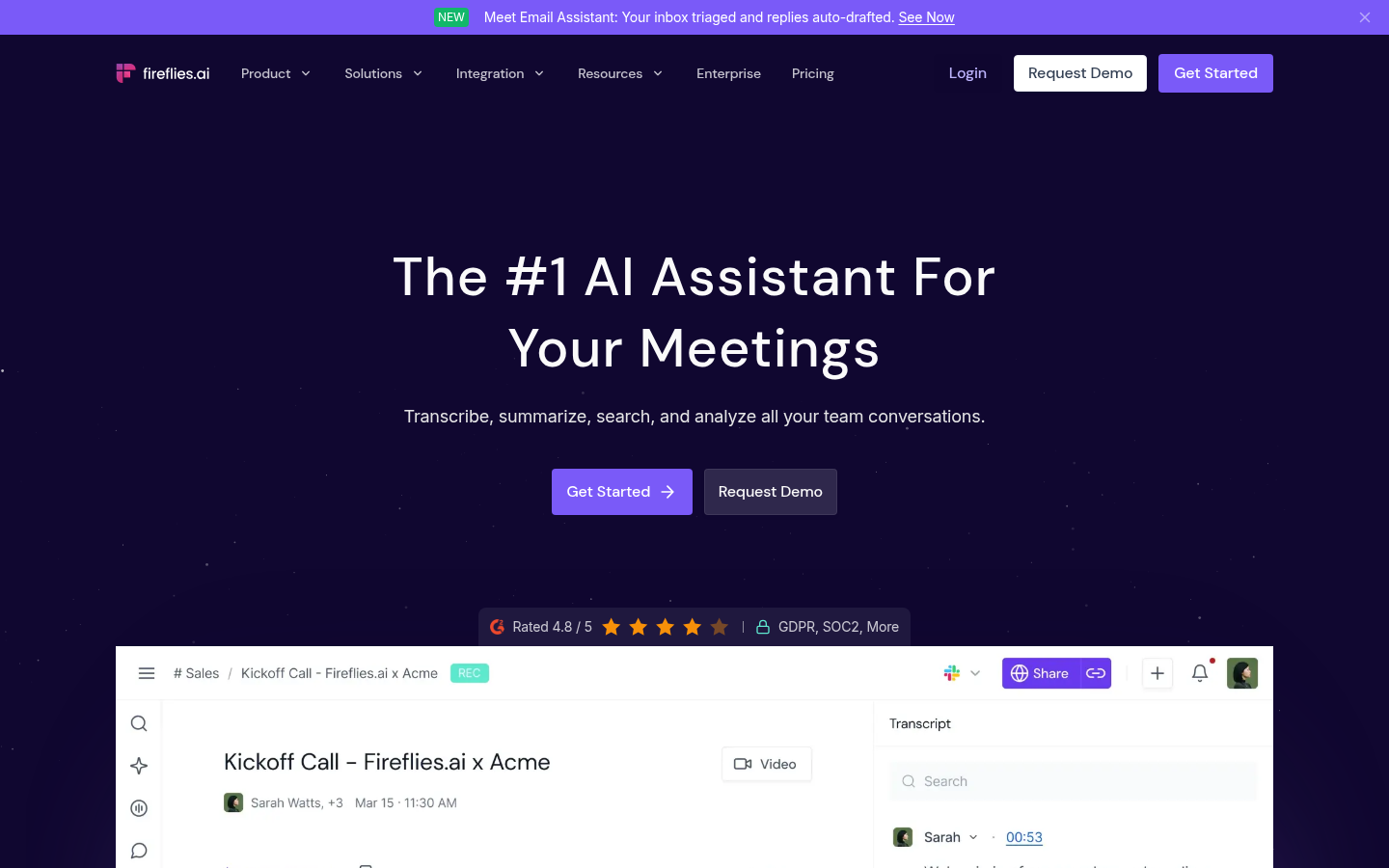
Fireflies.ai
- AskFred searches your entire meeting archive in plain language, not just the last call
- 200+ AI Skills cover role-specific extraction: call scoring, recruiting notes, follow-ups
- Deep CRM integrations, Salesforce and HubSpot, built for teams living inside a pipeline
- AI summary quality is gated behind a shared credit pool that a busy week burns through fast
- The interface gets noticeably busier once Skills, Trackers, and Channels stack up
The deepest feature set of the five, aimed squarely at teams, not solo use.
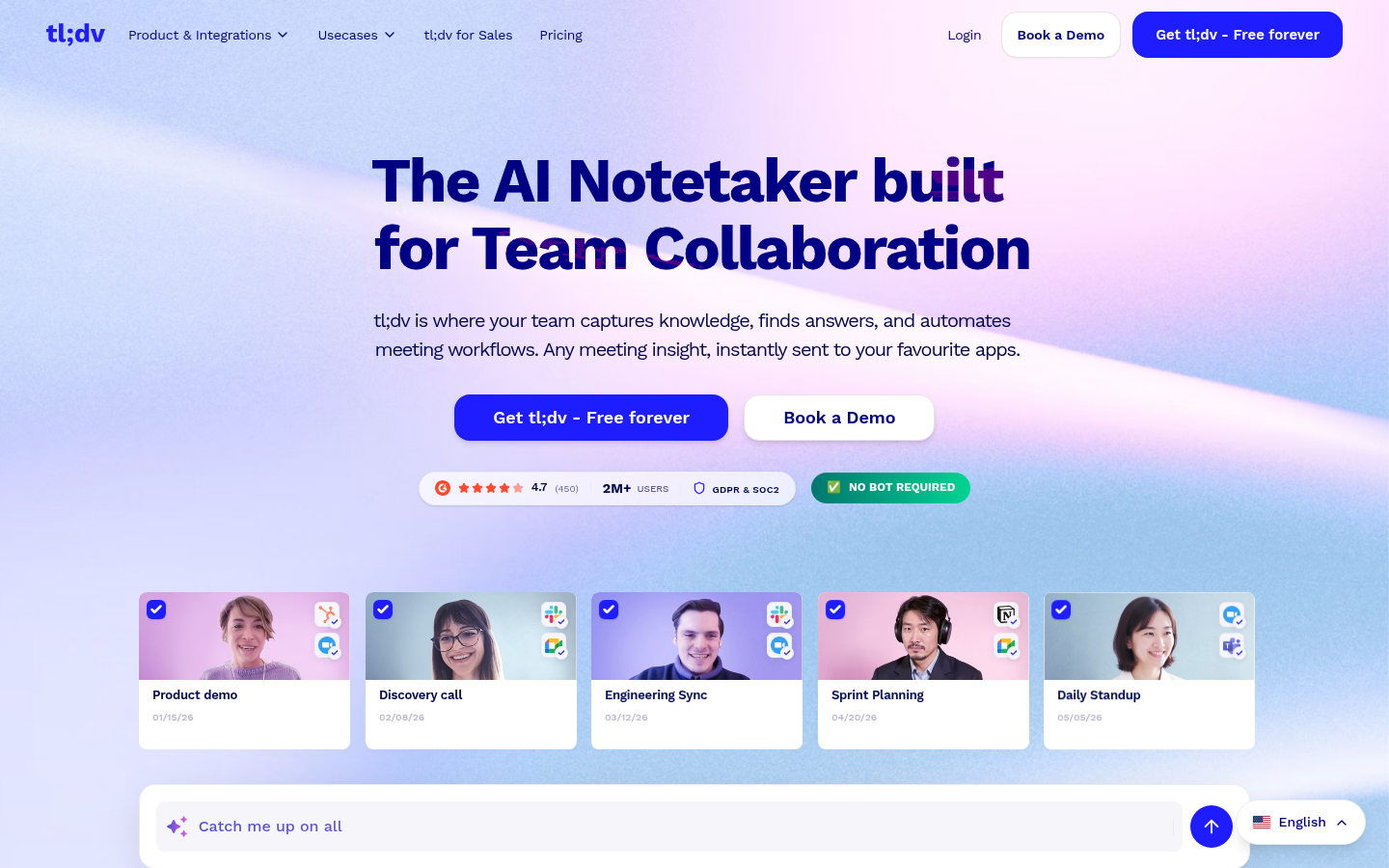
tl;dv
- Unlimited free recordings and transcription in 30+ languages, no 30-minute wall
- Multi-meeting AI search covers your whole call history, not one transcript at a time
- Sales-coaching layer, talk time and objection tracking, at a lower price than Gong-tier tools
- Free plan skips the AI meeting-report features that make the paid tiers worth it
- Business-tier pricing jumps sharply once a team outgrows the Pro plan
Built for revenue teams first, everyone else gets a solid free recorder along the way.
Verdict
TicNote wins because it treats a meeting as raw material for a deliverable, not an end point: a report, a deck, a dashboard, something I actually reopen. Fathom is the right call if unlimited and free matters more than anything else, its plan has no meeting cap or expiry. Fireflies and tl;dv make more sense on a sales team wired into a CRM than at a one-person shop. Otter.ai still does the core job cleanly, it is just the least ambitious of the five once the call ends.
How we tested
I recorded 14 real client and user-interview calls between late July and early September 2026, six to eight per tool, on the free tier of each of Otter.ai, TicNote, Fathom, Fireflies, and tl;dv, then compared what I got beyond the raw transcript: how the call was captured (a bot joining versus a browser extension versus a bot-free option), how long the free tier lasted before it asked for a card, whether I could search across older calls instead of just the one I just recorded, and what format the output took, plain text, a summary, or something closer to a finished document. Pricing and feature claims were checked against each vendor's own pricing page in the first week of September 2026, not third-party aggregators, since this category changes its tiers often; Fathom, for instance, was mid-transition into Superhuman when I ran this batch. Where a feature was listed as beta or region-limited, I noted that rather than folding it into the main comparison.